If you’ve been around dental builds long enough, you know this the hard way: the finishes aren’t “just finishes.” The wrong call doesn’t just look bad, it fails infection control, drives up maintenance costs, and can quietly wreck your workflow.
After 40 years in dental clinic construction, the three most technical interior finish categories (where owners consistently underestimate complexity) are flooring, wall systems, and casework.
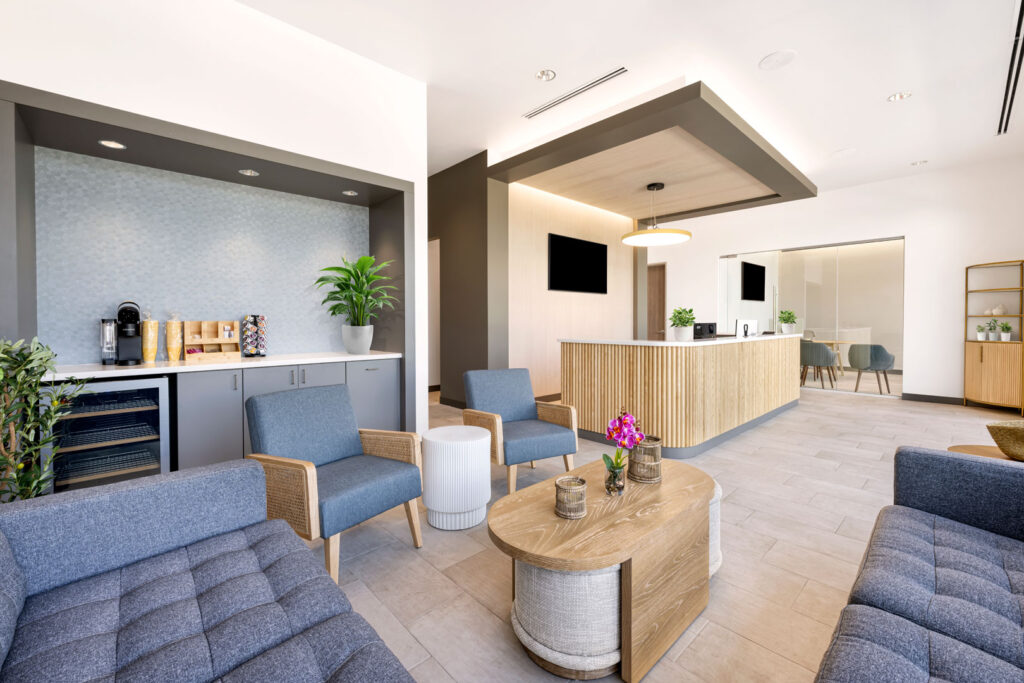
Flooring Systems (Infection Control + Longevity + Substrate Reality)
Dental flooring is one of the most unforgiving finish decisions you’ll make. Having built out several large scale dental clinics over the years, we have seen every type of misstep a client can make and we’re here to help you see how flooring choices are bigger than most realize.
Why it’s technical:
- You’re balancing seamless infection control with chemical resistance (disinfectants, etching agents, amalgam exposure).
- Subfloor conditions in TI spaces are rarely perfect, and moisture vapor transmission can destroy flooring within months if not addressed.
- You need slip resistance without creating a surface that traps contaminants, and rolling loads require specific wear ratings.
What actually works:
- Welded sheet vinyl or high-performance LVT with heat-welded seams (if detailed correctly)
- Resinous flooring systems in sterilization and lab areas
- Rubber flooring in select zones for acoustics and fatigue
Where it goes wrong:
- GC installs flooring before moisture testing, leading to adhesive failure
- Owner picks “healthcare-looking” LVT without understanding seam performance
- Transitions between materials create contamination edges
How our Design Build team influences this:
- The design team specifies performance criteria, not just product
- Bjerk validates slab conditions early (moisture testing, leveling budgets)
- We then coordinate transitions at sterilization zones so you don’t create infection control weak points
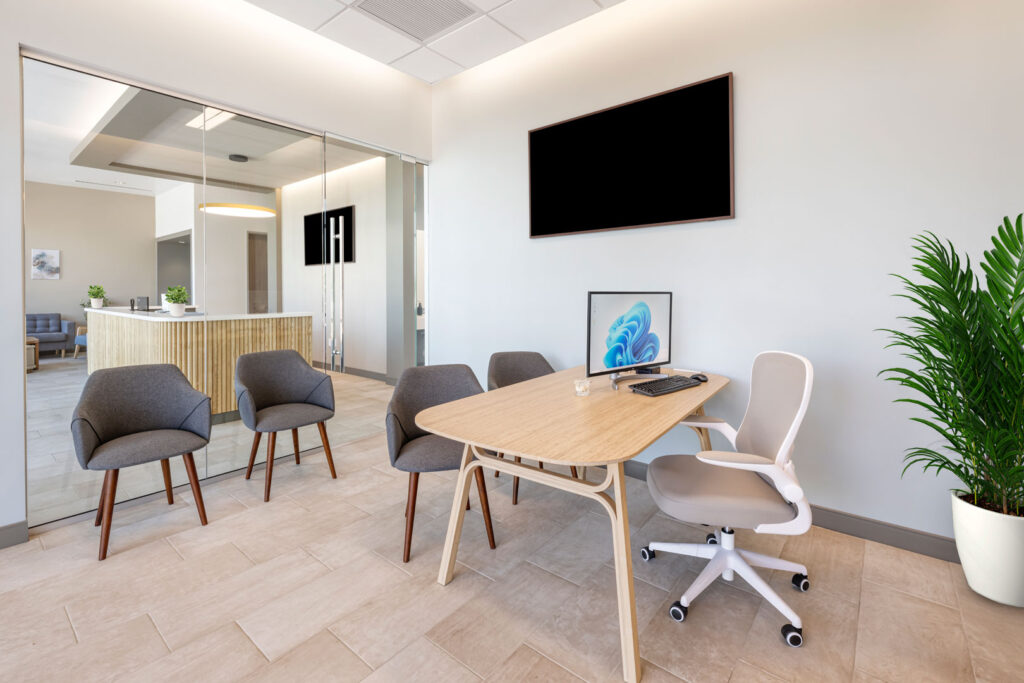
Wall Systems (Cleanability + Durability + Code Compliance)
Flooring impacts wall base detailing. Wall systems impact casework installation. Casework impacts MEP rough-ins. If these are designed in silos, you get conflicts in the field, where fixes are expensive and visible.
Why it’s technical:
- You need non-porous, scrubbable surfaces that hold up to constant disinfection
- Behind the finish layer: backing requirements for wall mounted equipment, cabinetry, monitors
- Integration with lead shielding for X-ray rooms and infection control zones
- Expansion, cracking, and joint detailing matter more than people think
What actually works:
- Level 5 drywall with high-performance epoxy or healthcare-grade coatings
- FRP (fiberglass reinforced panels) or rigid wall protection systems in sterilization and high-impact areas
- Integrated backing and blocking plans aligned with equipment layouts
Where it goes wrong:
- No coordination between equipment vendor and wall backing plan leads to field fixes, exposed patches
- Paint systems chosen for color, not cleanability or durability
- Poor transition detailing between materials creates cracks and bacteria traps
How our Design Build team influences this:
- The design team aligns wall assemblies with equipment shop drawings early
- Bjerk ensures backing and blocking are installed before close up
- Sequenced inspections make sure you don’t tear finished walls open later
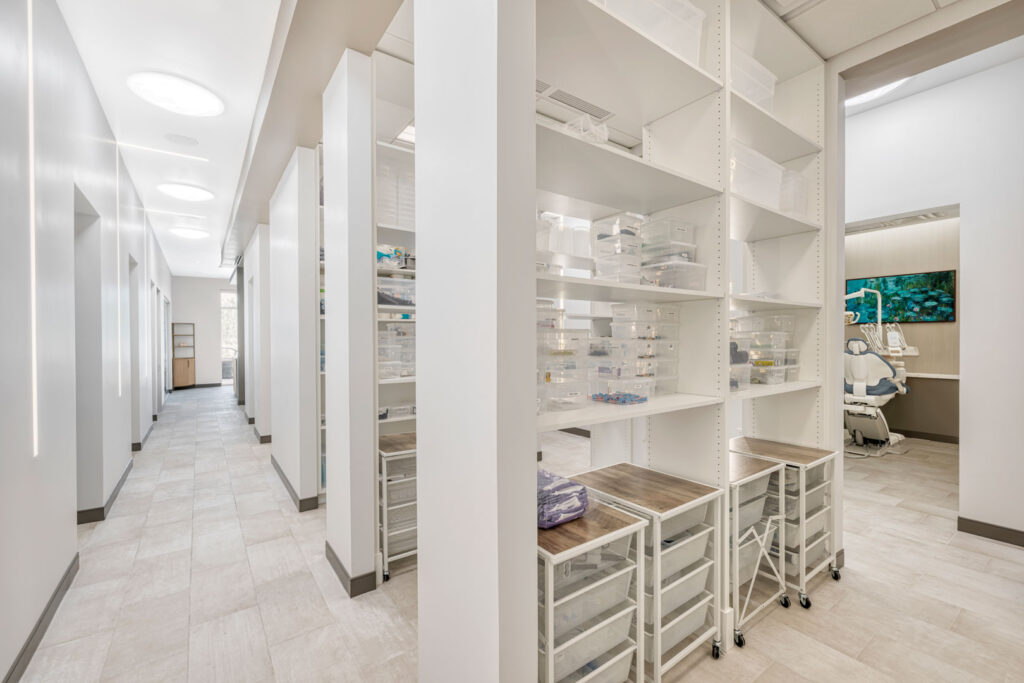
Casework & Millwork (Precision + Infection Control + Workflow)
This is where dental clinics either feel world class, or like a constant compromise.
Why it’s technical:
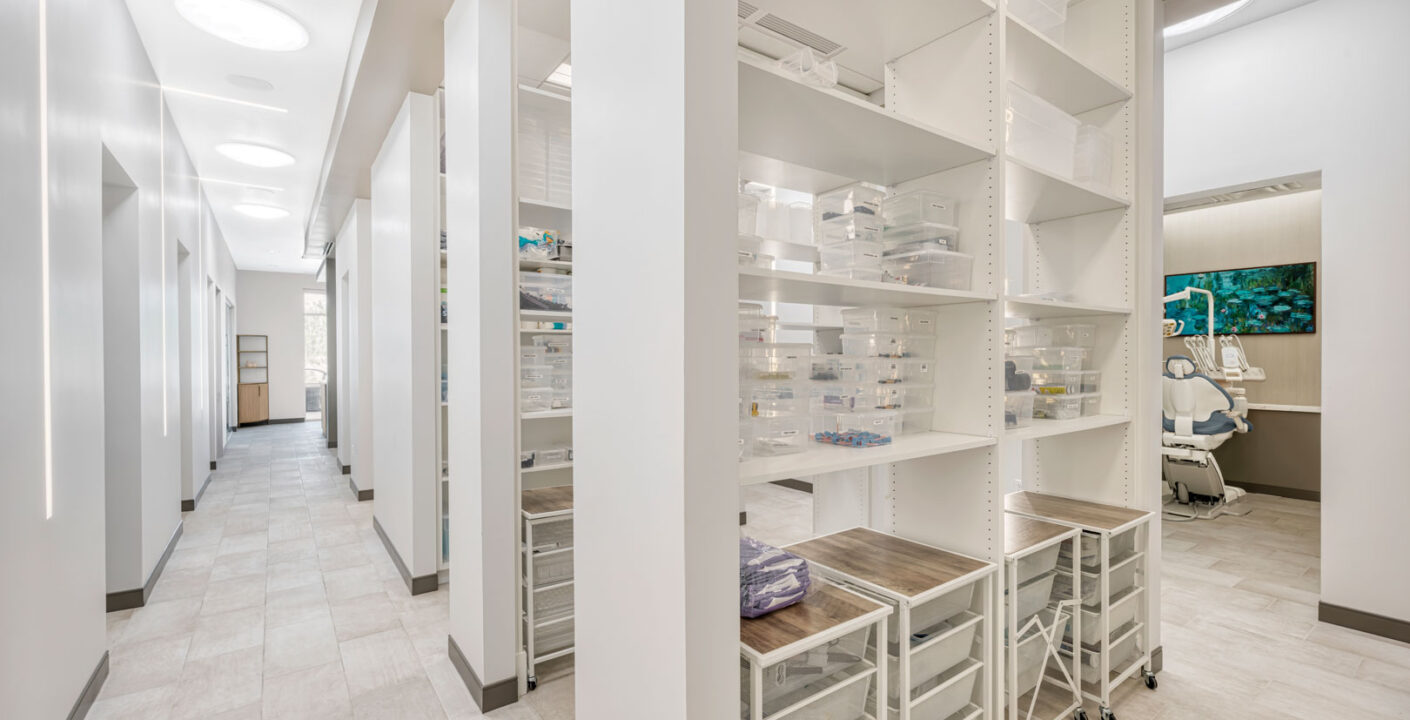
- Casework isn’t just storage, it’s integrated with plumbing, electrical, suction, and equipment
- Materials must be seamless, non-porous, and chemical resistant
- Ergonomics and workflow matter: assistant reach zones, sterilization flow, instrument processing
What actually works:
- Thermofoil or laminate systems with tight edge detailing
- Solid surface countertops with integral sinks (eliminates seams)
- Modular casework systems designed specifically for dental operations
Where it goes wrong:
- Millworker builds to architectural elevations without coordinating equipment specs
- Seams, joints, and edges fail under chemical exposure
- Sterilization layout ignores clear handling flow, creating compliance issues
How our Design Build team influences this:
- We coordinate directly with product reps early, not after design is “done” or equipment is procured
- Shop drawings are reviewed against real workflows, not just dimensions
- Bjerk vets fabricators who understand healthcare tolerances, not just commercial cabinetry
What a Smart Owner Should Do
If you’re building or renovating a dental clinic or medical office building that needs to prepare for the possibilities of the future, push your team on these three things early:
- “Show me how flooring transitions are mapped for sterilization”
- “Where is all wall backing coordinated with equipment?”
- “Walk me through how this casework design supports our sterilization workflow.”
If they can’t answer clearly before construction starts, you’re heading toward change orders and compromises. Flooring, wall systems, and casework are the most technical finish decisions in a dental clinic because they sit at the intersection of infection control, durability, and workflow.
A strong design build team doesn’t just pick materials, they align performance, constructability, and clinical use so the space actually works under pressure. Bjerk Builders can help: connect with our estimating team to get a budget rooted in reality and delivered now.